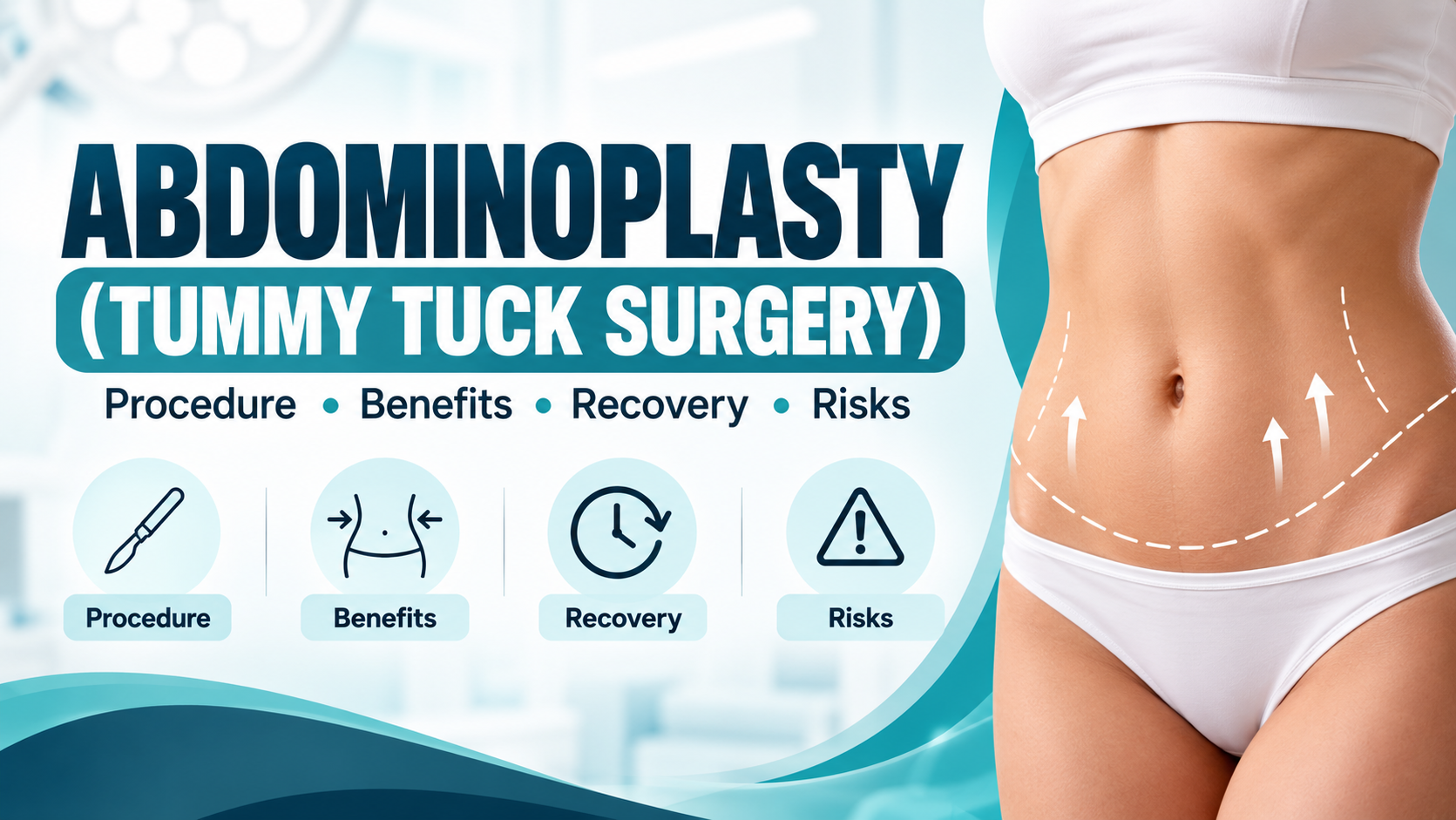
Excess abdominal skin, stubborn fat deposits and weakened abdominal muscles can affect the appearance of the stomach, even after weight loss or regular exercise. Pregnancy, ageing and significant changes in body weight can contribute to a loose or protruding abdomen. For people seeking a firmer abdominal contour, abdominoplasty, also known as tummy tuck surgery, may be an appropriate option.
Abdominoplasty is a cosmetic surgical procedure that removes excess skin and fat from the abdomen and may tighten weakened or separated abdominal muscles when required. It is designed to create a smoother and firmer abdominal profile.
If you are considering abdominoplasty in Delhi, consulting an experienced plastic surgeon such as Dr. Shobha Jindal can help you understand the available surgical options, expected outcomes, recovery process and potential risks before making a decision.
What Is Abdominoplasty?
Abdominoplasty is a body-contouring procedure that reshapes the abdominal area by removing excess skin and selected fatty tissue. During surgery, the surgeon may also repair separated abdominal muscles, a condition known as rectus diastasis.
This procedure is commonly considered by individuals who have loose abdominal skin following pregnancy or substantial weight loss. It may also help people whose abdominal skin has lost elasticity with age.
Unlike liposuction, which primarily removes localised fat deposits, abdominoplasty addresses excess skin and, when indicated, abdominal muscle separation. Liposuction may sometimes be combined with the procedure to improve the overall contour.
However, abdominoplasty is not a weight-loss treatment and does not replace a balanced diet, regular exercise or medical weight management.
Who Is a Suitable Candidate for Abdominoplasty?
Abdominoplasty may be suitable for adults who are in good general health and have realistic expectations about the results of surgery.
You may wish to discuss tummy tuck surgery with a plastic surgeon if you:
- Have loose or sagging abdominal skin.
- Have excess skin after significant weight loss.
- Notice abdominal muscle separation following pregnancy.
- Have an abdominal bulge that persists despite maintaining a stable weight.
- Have excess lower abdominal skin that affects clothing comfort or body contour.
- Are generally healthy and can safely undergo surgery and anaesthesia.
When Should You Consider Postponing Surgery?
Abdominoplasty may need to be postponed if you are planning significant weight loss or a future pregnancy, as these changes can affect the surgical results.
People who smoke or use nicotine may have a higher risk of wound-healing complications. Smoking cessation before and after surgery, according to the surgeon’s instructions, is important.
Patients with certain medical conditions may require additional assessment or optimisation before surgery. A personal consultation is necessary to determine whether abdominoplasty is appropriate for you.
Types of Abdominoplasty Surgery
The appropriate type of tummy tuck depends on the amount and location of excess skin, abdominal muscle condition, previous surgeries and individual aesthetic goals.
1. Mini Abdominoplasty
A mini tummy tuck is generally considered for selected patients with a relatively small amount of loose skin below the belly button.
It typically involves a shorter incision than a full abdominoplasty and usually does not require repositioning the belly button. The extent of muscle repair depends on the patient’s anatomy and surgical plan.
2. Full Abdominoplasty
A full tummy tuck addresses more extensive loose skin across the abdomen.
The procedure generally involves removing excess lower abdominal skin, redraping the remaining skin and repositioning the belly button through an opening in the reshaped skin. Abdominal muscle tightening may be performed when indicated.
3. Extended Abdominoplasty
Extended abdominoplasty may be appropriate for people with excess skin that extends beyond the front of the abdomen towards the flanks or sides of the waist.
The incision is longer than that used for a standard tummy tuck, allowing the surgeon to address a broader area of excess tissue.
4. Abdominoplasty with Liposuction
In selected patients, liposuction may be combined with abdominoplasty to improve contouring around the abdomen, waist or flanks.
The decision to combine procedures depends on the patient’s anatomy, medical suitability and the additional risks associated with the operation.
How Is Abdominoplasty Performed?
Abdominoplasty is usually performed under general anaesthesia. The exact surgical approach depends on the type of procedure and the patient’s individual needs.
The process generally involves the following steps.
Step 1: Consultation and assessment
The surgeon reviews your medical history, previous pregnancies or abdominal operations, weight stability, skin quality and expectations. An examination helps determine the most suitable surgical technique.
Step 2: Anaesthesia and incision
After anaesthesia, the surgeon makes an incision, generally across the lower abdomen. The location and length depend on the planned procedure and the amount of excess skin.
Step 3: Removal of excess skin and fat
Excess abdominal skin and selected fatty tissue are removed. The remaining skin is repositioned to create a smoother contour.
Step 4: Abdominal muscle repair
If weakened or separated abdominal muscles are present and repair is appropriate, the surgeon may bring them closer together using sutures.
Step 5: Belly button repositioning, when required
During a full tummy tuck, the belly button is usually repositioned through an opening in the newly positioned abdominal skin.
Step 6: Closure and postoperative care
The incisions are closed, and dressings are applied. Surgical drains may be used temporarily when necessary to manage fluid accumulation. A compression garment may also be recommended during recovery.
What Are the Benefits of Abdominoplasty?
For appropriately selected patients, abdominoplasty may provide several improvements in abdominal contour.
- Removal of excess skin: Helps address loose or hanging abdominal skin.
- A firmer abdominal appearance: Creates a smoother and flatter-looking abdominal profile.
- Muscle repair when indicated: May improve the contour associated with abdominal muscle separation.
- Improved body proportions: Can help create a more balanced appearance between the abdomen and waist.
- Removal of some stretch marks: Stretch marks located on skin removed during surgery may also be removed. Stretch marks outside the excised area generally remain.
Results vary according to skin quality, anatomy, weight stability, surgical technique and healing. The surgeon should explain what can reasonably be achieved in your individual case.
Abdominoplasty Recovery: What to Expect
Recovery after tummy tuck surgery varies depending on the extent of the operation, whether muscle repair was performed and whether other procedures were combined with it.
First Few Days
Some pain, tightness, swelling, bruising and fatigue are expected. Your surgeon will provide instructions for wound care, medication, movement and any drains.
Gentle walking is generally encouraged as early as safely possible to help reduce the risk of blood clots.
First Two Weeks
Many patients gradually resume light daily activities during the first one to two weeks, although recovery differs from person to person.
You may initially need to walk with your body slightly bent forward to reduce tension on the incision. Follow your surgeon’s guidance regarding sleeping positions, bathing and returning to work.
Weeks Three to Six
Swelling should gradually improve, but the abdomen may remain swollen or feel tight. A compression garment may be recommended for several weeks.
Heavy lifting, strenuous exercise and activities that place tension on the abdominal muscles should be avoided until your surgeon confirms that they are safe.
Long-Term Recovery
The abdominal contour continues to improve as swelling subsides and tissues heal. Scars may take many months, sometimes a year or longer, to mature and fade.
Following postoperative instructions, maintaining a stable weight and attending follow-up appointments can help support healing and preserve the results.
What Are the Risks and Complications of Abdominoplasty?
Although abdominoplasty can improve abdominal contour, it is a major surgical procedure and carries potential risks.
Possible complications include:
- Bleeding and infection
- Fluid accumulation beneath the skin, known as a seroma
- Delayed wound healing or wound separation
- Visible, widened or unfavourable scarring
- Changes in skin sensation or persistent numbness
- Skin or fatty tissue damage
- Asymmetry or an uneven abdominal contour
- Blood clots in the legs or lungs
- Anaesthesia-related complications
- Persistent pain or the need for additional surgery
Individual risk depends on medical history, smoking or nicotine use, the extent of surgery and other factors. A detailed consultation helps you understand these risks and the measures used to reduce them.
Seek urgent medical attention if you develop chest pain, sudden breathlessness, severe bleeding or other symptoms that may indicate a serious complication after surgery.
Abdominoplasty vs Liposuction: What Is the Difference?
Although both procedures can improve body contour, they address different concerns.
| Feature | Abdominoplasty | Liposuction |
|---|---|---|
| Main purpose | Removes excess skin and reshapes the abdomen | Removes localised fat deposits |
| Loose skin | Can remove substantial excess skin | Does not remove substantial excess skin |
| Muscle repair | May include abdominal muscle repair | Does not repair separated abdominal muscles |
| Scarring | Usually involves a longer lower abdominal scar | Usually involves small incision scars |
| Best suited for | Selected patients with loose skin or muscle separation | Selected patients with localised fat and adequate skin elasticity |
Some patients may benefit from one procedure, while others may be suitable for a combination. The choice should be based on a clinical examination rather than the desire for the quickest or most dramatic result.
How to Maintain Your Abdominoplasty Results
Abdominoplasty results can be long-lasting, but future changes in weight, pregnancy and ageing may affect the abdominal contour.
To support your results:
- Maintain a stable weight through balanced nutrition and regular physical activity.
- Follow your surgeon’s instructions during recovery.
- Avoid smoking and nicotine as advised by your surgical team.
- Attend scheduled follow-up appointments.
- Discuss future pregnancy plans before surgery.
- Seek medical advice if you notice unexpected swelling, wound changes or other concerning symptoms.
Maintaining healthy habits is important for general wellbeing as well as long-term surgical outcomes.
Why Consult Dr. Shobha Jindal for Abdominoplasty in Delhi?
Choosing a qualified plastic surgeon is an important step when considering abdominoplasty. A consultation should include an assessment of your abdominal skin, fat distribution, muscle condition, medical history and personal goals.
Dr. Shobha Jindal provides a point of consultation for individuals exploring cosmetic and plastic surgery options in Delhi. Patients considering a tummy tuck should discuss the appropriate technique, expected scar placement, anaesthesia, recovery requirements, potential complications and likely outcomes before deciding on surgery.
A personalised treatment plan helps ensure that the procedure is selected according to your anatomy, health and expectations rather than a standardised approach.
To learn more about Dr. Shobha Jindal and the services available, visit the official website:
Website: https://cosmeticsurgeondelhi.co.in/
Frequently Asked Questions About Abdominoplasty
1. What is abdominoplasty surgery?
Abdominoplasty, or tummy tuck surgery, is a cosmetic procedure that removes excess abdominal skin and selected fatty tissue. It may also tighten separated abdominal muscles when clinically appropriate.
2. Is abdominoplasty the same as a tummy tuck?
Yes. Abdominoplasty is the medical name for tummy tuck surgery. Both terms refer to a procedure intended to improve the contour of the abdomen by addressing excess skin and, when indicated, abdominal muscle separation.
3. Is abdominoplasty a weight-loss procedure?
No. Abdominoplasty is a body-contouring procedure, not a substitute for weight loss. Patients are generally advised to reach and maintain a stable weight before considering surgery.
4. How long does recovery from abdominoplasty take?
Recovery varies depending on the extent of surgery and individual healing. Some patients resume light activities within one to two weeks, while strenuous exercise and heavy lifting may remain restricted for around four to six weeks or longer, depending on the surgeon’s assessment.
5. Does abdominoplasty remove stretch marks?
It may remove some stretch marks if they are located on the skin excised during surgery. Stretch marks outside the removed area will generally remain, although their position or appearance may change.
6. Will abdominoplasty leave a scar?
Yes. Abdominoplasty involves surgical incisions, and a scar is expected. The surgeon generally plans the lower abdominal incision so that it may be concealed beneath underwear or swimwear where possible. Scar appearance varies and can change over time.
7. Can abdominoplasty repair abdominal muscles after pregnancy?
Abdominoplasty may include repair of separated abdominal muscles, known as rectus diastasis, when appropriate. A clinical assessment is necessary to determine whether muscle repair is required and whether surgery is suitable.
8. Can I become pregnant after abdominoplasty?
Pregnancy is possible after abdominoplasty, but it can stretch the abdominal skin and muscles and alter the results. Patients who are planning future pregnancies are generally advised to discuss postponing surgery with their plastic surgeon.
9. Is abdominoplasty safe?
Abdominoplasty can be performed safely in appropriately selected patients, but no major operation is free from risk. A qualified plastic surgeon will assess your health, explain potential complications and provide instructions to support safe recovery.
10. How do I know whether I need a mini or full tummy tuck?
A mini tummy tuck may suit selected patients with limited loose skin below the belly button. A full tummy tuck may be more appropriate when excess skin or muscle separation is more extensive. Your surgeon can recommend the suitable option after an examination.
Conclusion
Abdominoplasty can help selected patients address excess abdominal skin, improve abdominal contour and repair weakened or separated muscles when indicated. Understanding the procedure, recovery period, potential risks and realistic outcomes is essential before making a decision.
If you are considering abdominoplasty in Delhi, arrange a consultation with Dr. Shobha Jindal to discuss your concerns, evaluate your suitability and understand the treatment options available for your individual needs.