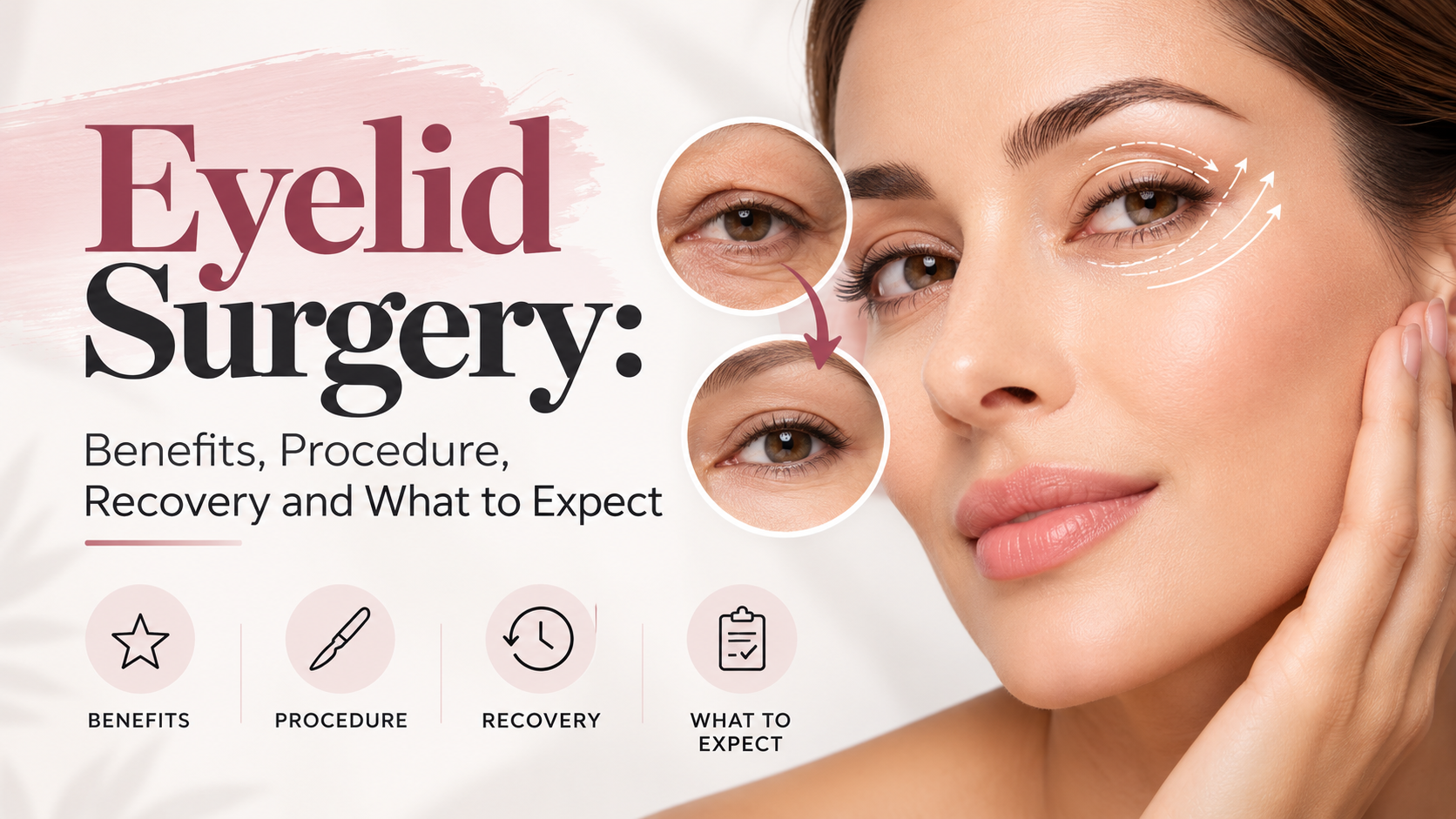
The eyes are one of the most noticeable features of the face, but changes around the eyelids can affect both appearance and, in some cases, vision. Eyelid surgery, also called blepharoplasty, is a surgical procedure designed to remove or reposition excess skin and fat around the upper or lower eyelids. It can help create a more refreshed appearance and may also improve vision when drooping eyelid skin interferes with the visual field.
For individuals considering eyelid surgery, understanding the procedure, benefits, recovery and expected results can help in making an informed decision.
What Is Eyelid Surgery?
Eyelid surgery or blepharoplasty is a procedure performed on the upper eyelids, lower eyelids, or both. Depending on the patient’s concerns, the surgery may involve removing excess skin, adjusting underlying fat, or tightening supporting tissues.
The procedure may be considered for concerns such as:
- Drooping or sagging upper eyelid skin
- Excess skin affecting peripheral vision
- Puffy or prominent bags under the eyes
- Excess fat around the eyelids
- Loose skin of the lower eyelids
- Tired or aged appearance around the eyes
Who May Benefit From Eyelid Surgery?
Eyelid surgery may be suitable for adults who are bothered by changes around their eyelids or have functional problems caused by excess eyelid tissue.
A consultation is important because eyelid concerns can have different causes. In some patients, drooping may be related to excess skin, while others may have conditions involving the eyelid muscles or eyebrows. A detailed assessment helps determine whether blepharoplasty or another treatment is appropriate.
Upper Eyelid Surgery
Upper eyelid surgery primarily addresses excess skin and, when necessary, underlying fat. An incision is generally placed within the natural crease of the upper eyelid, allowing the resulting scar to become less noticeable as it heals.
When excess upper eyelid skin obstructs the field of vision, surgery may provide a functional benefit in addition to improving the appearance of the eyes.
Lower Eyelid Surgery
Lower eyelid surgery is commonly performed to address under-eye bags, excess skin and changes in the tissues beneath the eyes.
Depending on the individual’s anatomy and concerns, the surgeon may remove or reposition fat and address excess skin. In selected patients, techniques that preserve and reposition fat may help achieve a smoother transition between the lower eyelid and cheek.
How Is Eyelid Surgery Performed?
The exact surgical technique depends on the patient’s anatomy and treatment goals. Before surgery, the surgeon evaluates the eyelids, facial structure, skin quality and overall eye health.
During the procedure:
- The appropriate surgical markings are made.
- Anaesthesia is administered according to the planned procedure.
- Excess skin and, when required, fat are removed or repositioned.
- Supporting tissues may be adjusted where appropriate.
- Incisions are carefully closed to promote proper healing.
The technique is individualized rather than being the same for every patient.
Benefits of Eyelid Surgery
Depending on the patient’s concerns, potential benefits may include:
- A more refreshed and rested appearance
- Reduction of upper eyelid skin excess
- Reduction of under-eye bags
- Improved eyelid contour
- Improvement in vision when excess eyelid skin obstructs the visual field
- A more youthful appearance around the eyes
The goal should be a natural-looking result that maintains the individual’s facial characteristics.
Recovery After Eyelid Surgery
Some swelling, bruising, tightness or mild discomfort can occur following eyelid surgery. These symptoms generally improve gradually during recovery.
Patients may be advised to:
- Follow all postoperative instructions carefully
- Use prescribed medications or eye care as directed
- Avoid strenuous activity for the period recommended by the surgeon
- Protect the eyes from excessive sun exposure
- Avoid rubbing or putting pressure on the operated area
- Attend scheduled follow-up appointments
Recovery varies from person to person. The final appearance may continue to improve as swelling settles and the tissues heal.
Is Eyelid Surgery Safe?
Blepharoplasty is a commonly performed procedure, but like any surgery, it carries potential risks. These can include bleeding, infection, asymmetry, scarring, dry eyes, difficulty closing the eyes, changes in sensation and the possibility of needing further treatment.
A detailed consultation with an experienced surgeon is important to understand the potential benefits and risks in an individual case.
Frequently Asked Questions About Eyelid Surgery
1. Is eyelid surgery only performed for cosmetic reasons?
No. Eyelid surgery can have both cosmetic and functional purposes. In some patients, excess upper eyelid skin can interfere with peripheral vision.
2. Can both upper and lower eyelids be treated?
Yes. Upper and lower eyelid surgery can be performed individually or together, depending on the patient’s concerns and overall assessment.
3. Will eyelid surgery leave scars?
Incisions are carefully positioned, often within natural eyelid creases. Scars usually become less noticeable as they mature, although healing varies between individuals.
4. How long do the results of eyelid surgery last?
Results can be long-lasting, although the natural ageing process continues. Skin and tissues may gradually change over time.
5. Is eyelid surgery suitable for everyone?
No. Suitability depends on factors such as eyelid anatomy, eye health, medical history and individual expectations. A consultation is necessary before deciding on surgery.
Choosing the Right Surgeon for Eyelid Surgery
Eyelid surgery requires a detailed understanding of the delicate anatomy around the eyes as well as facial aesthetics and functional considerations. Choosing a qualified and experienced surgeon and discussing your expectations during consultation can help you make an informed decision.
If you are considering eyelid surgery in Delhi NCR, consult Dr. Shobha Jindal for an individualized assessment and guidance regarding the most appropriate treatment for your eyelid concerns.