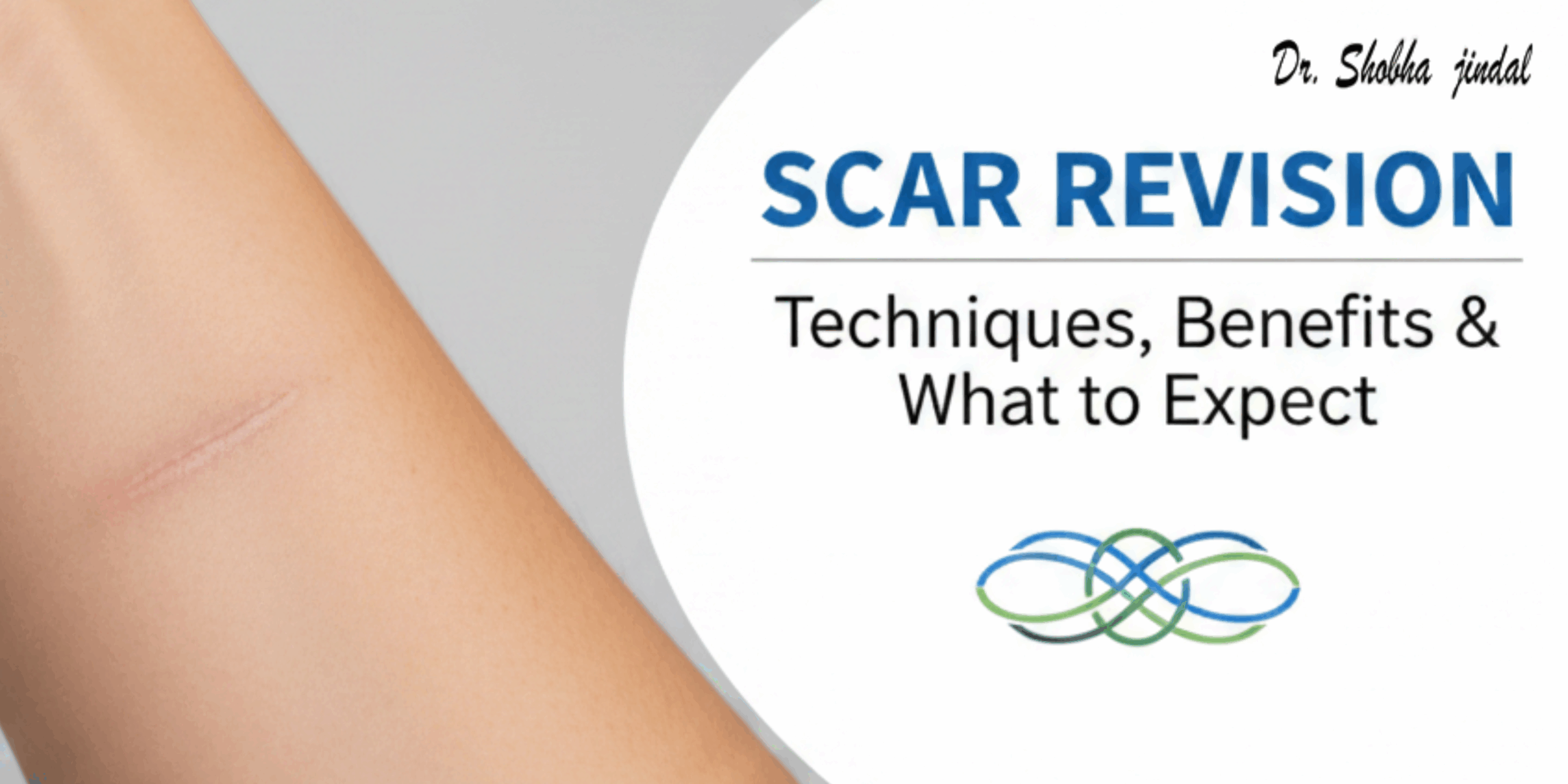
Scars are like books-injuries, burns, surgeries, or a past that’s been hurt. However, for a great number of people, visible scars can lower their self-esteem and even affect their daily lives. Scar revision is a certain type of cosmetic surgery that aids the appearance, the feel, and the level of the scar by making the scar more similar to the other parts of the skin. It is known that no operation can remove a scar forever, but present-day methods can make a scar look and feel much better.
This article is about scar revision, who needs it, the different ways of treatment, the time for recovery, and what results you can obtain.
What Is Scar Revision?
Scar revision is a broad term for medical and surgical methods aimed at lessening the visual impact of scars. Essentially, it is about making the scar less visible by harmonizing its color, texture, height, and skin lines.
The scars that may need a scar revision are:
- Acne scars
- Post-burn scars
- Surgical scars
- Injury or accident scars
- Hypertrophic or keloid scars
- Contracture scars (usually after burns)
Scars are a changing thing and some of them will become tighter, raised, and discolored. If a scar is a source of cosmetic concern or causes functional problems—such as limited movement around the eyelids, neck, or joints—scar revision can mitigate the problem.
Types of Scars That Can Be Treated
Different scars require different treatments. A doctor will use the most effective treatment after identifying the type of scar:
- Hypertrophic Scars
These are thick, raised scars that do not spread beyond the area of the wound. Improvement of the scars may be achieved by silicone therapy, injections, or lasers.
- Keloids
Keloids are bigger, more aggressively growing scars that extend beyond the wound. The treatment may be composed of steroid injections, pressure therapy, or surgical removal combined with radiation or silicone sheets.
- Atrophic Scars
Indentations of the skin caused by acne or chickenpox. These usually need fillers, microneedling, subcision, or laser resurfacing.
- Contracture Scars
These are the scars resulting from a burn, which causes the skin to tighten and the movement to be limited. It is usually necessary to use surgery and skin grafts to release the contracture.
Common Scar Revision Techniques
1. Operating Scar Revision
Surgical procedures like Z-plasty, W-plasty, or full scar excision work to realign or reshape the scar so that it merges more closely with the natural skin creases. This is the most appropriate method for long, thick, or tightly scarred areas.
- Laser Resurfacing
Fractional CO₂ or erbium lasers work to even the skin surface, fade the discoloration, and break apart the thick scar tissue. Laser treatment is very good for the acne scars and the scars after burns.
- Dermabrasion & Microneedling
These methods aid in the skin condition by the intake of collagen through the process of new collagen formation. They are quite potent for the skin that is uneven, rough, or with shallow scars.
- Steroid or PRP Injections
Injection of steroids right into the scar tissue helps reduce the volume of the scar tissue in the case of keloids and hypertrophic scars. PRP (Platelet-Rich Plasma) is a support for the healing process and eventually, scar tissue improvement.
- Skin Grafting / Flap Surgery
In the case of deeply-seated burn scars or large defects, surgeons may opt for skin grafts or local flaps to cover the lost tissue and regain the function.
- Silicone Gel & Pressure Therapy
Methods that do not involve surgery like the use of silicone sheets play an important role in the process of scar softening, flattening, and lightening. Pressure garments are worn by patients who have suffered burns.
After the intervention, the patient can take care of himself/herself by:
- Putting on the ointments that have been prescribed
- Not exposing oneself to the sun
- After the wound has healed, applying silicone sheets
- Following-up regularly for an optimum outcome
Scars are still going through the process of maturation even after several months; thus, it may take from 3 to 12 months for the final results to be visible.
Results: What to Expect
Scar revision lowers the visual impact of scars—it hardly ever removes them totally. The right kind of expectation is absolutely necessary. The majority of patients notice:
- Smoother skin
- Symmetry bettered
- Redness or pigmentation that is lessened
- Scars becoming more even, milder
- More movement in the parts that are tightly bound by the skin
If the operation is performed by a skilled cosmetic or plastic surgeon, the effects stay for a very long time and the person’s self.
Conclusion
Scar revision is one of the most powerful means to make both the look and the use of the skin better, no matter if the scars were caused by burning, hitting, acne or surgery. Today made it possible to surgically fix any scar to the smallest extent of the problem by the use of a wide variety of surgical techniques, different kinds of lasers as well as non-surgical options. In case a scar is hampering your life in any way (physically or emotionally) then making an appointment with a suitably credentialed cosmetic surgeon is your initial step to advancing toward skin that is more even and looks healthier.